

The history of MBTI®
One the world's most used assessment tools
The Myers-Briggs Type Indicator (MBTI®) emerged in the United States during the early to mid 20th century, developed by Katharine Cook Briggs and her daughter, Isabel Briggs Myers.
Their interest in personality type theory was sparked when Briggs met Isabel's future husband, Clarence Myers. She noticed that Clarence Myers viewed the world in markedly different ways, which led her to initiate a comprehensive study of literature on temperament and personality theory.
During World War II, the urgency and relevance of their project increased dramatically. Myers believed that greater understanding of individual differences could foster improved cooperation and reduce conflict, particularly in a post-war context. Her conviction was that a world in which people understood each other would be a better place for all.
Driven by this vision, Myers was determined to create a practical tool that could provide individuals with insight into their psychological preferences. This ambition resulted in the development of the MBTI. She spent over two decades meticulously crafting and validating questions for the type indicator, as well as refining the underlying theoretical framework.
She spent the next 20 years developing questions and validating the instrument and the theory. The MBTI instrument was first published in 1962. Today, the Myers-Briggs Type Indicator – MBTI continues to be one of the most widely used psychological tools for understanding personality differences and improving workplace collaboration.
1943
The first edition of MBTI® is developed by Katharine Cook Briggs and Isabel Briggs Myers and is copyrighted.
1962
Introduction to Type is published and the Educational Testing Services (ETS) publishes a research version of the MBTI® instrument and the MBTI Manual.
1968
The MBTI questionnaire is translated for the first time and is published in Japan.
1985
Second edition of the MBTI® Manual is published.
2001
MBTI Step II™ is published
2026
Human House becomes European certification partner in the Myers-Briggs tools.
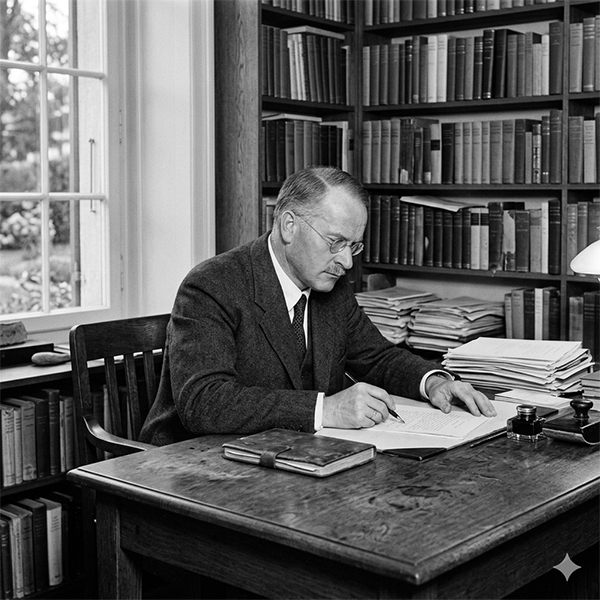
What is Jung’s influence on the MBTI® theory?
Carl Gustav Jung published Psychological Typesin 1921, introducing foundational concepts in personality theory. When Katharine Cook Briggs read Jung's work, she recognised significant parallels with her own ideas. Both Briggs and her daughter Isabel Briggs Myers found Jung's theories so valuable that they were inspired to further develop and expand upon them.
Their goal was to make Jung's insights into personality type more accessible and practical for a wider audience. Through their efforts, they created the Myers-Briggs Type Indicator (MBTI®), which synthesises Jung's original concepts with their own research, providing a practical framework for understanding individual differences.
Who publishes the MBTI® questionnaire now?
The Myers-Briggs Company has been the official publisher, researcher, and developer of the MBTI® instrument since 1975.
Today, The Myers-Briggs Company continues to enhance and refine the questionnaire, remaining true to Isabel Briggs Myers’ guiding principle: that a deeper understanding of personalities and differences can have a positive impact on individuals, teams, and organisations worldwide.
Since 2026, Human House has been European Certification Partner in the Myers-Briggs tools and offers accredited certification programmes across many countries on the European continent – including the UK, Germany, the Netherlands, and Denmark.
By partnering with The Myers-Briggs Company, Human House ensures that professionals across Europe receive high-quality training and support in the use of the Myers-Briggs tools.