
Vision Zero and Psychosocial Wellbeing
Create structure and wellbeing at your workplace
A healthy psychosocial working environment is the driving force that enables your employees to work together as a team. It helps to ensure their mental health and strengthens both productivity and creativity. But a positive psychosocial environment does not happen by itself – it requires active effort and conscious decisions to ensure good and healthy working conditions.
Break down organisational silos and barriers
In many organisations, HR is responsible for supporting the development of the psychosocial working environment, while safety and health representatives typically focus on safety and health issues. HR departments often have considerable experience supporting employees, but may be less familiar with systematically developing a safe and healthy physical working environment. Conversely, safety and health representatives may have limited experience addressing psychosocial factors.
By breaking down the organisational silos and uniting safety, health, and psychosocial wellbeing in a single, integrated strategy, it is possible to achieve greater efficiency and synergy throughout the workplace.
How we support you with Vision Zero and psychosocial wellbeing
We identify your organisation’s current level of prevention within the psychosocial working environment and guide your next steps towards a healthier and stronger working environment. Our services include electronic assessments and workshops as well as supporting OSH professionals, employees, and leaders at all levels.
- Quantitative mapping of your organisation’s current level of prevention within the psychosocial working environment
- Self-asessment of individual roles and contributions in promoting psychosocial wellbeing
- Proactive goals for psychosocial wellbeing
- Roles and responsibilities within psychosocial wellbeing and the 7 Golden Rules
Use Vision Zero to promote psychosocial wellbeing at your workplace
With Vision Zero, your organisation can take the psychosocial working environment to the next level. Vision Zero is about systematically preventing challenges – including those related to mental health and wellbeing. No matter where your organisation is on its journey, Vision Zero helps you move from reactive solutions to pro-active and targeted actions.
Vision Zero and the psychosocial wellbeing are not only about preventing stress and dissatisfaction – they are about making wellbeing and mental health a natural and prioritised part of your workplace culture. By integrating wellbeing into your business strategy, actively involving both leaders and employees, and focusing on social support, autonomy, and opportunities for development, you create a workplace that attracts, retains, and engages talented people.
Assess your organisation's level of prevention
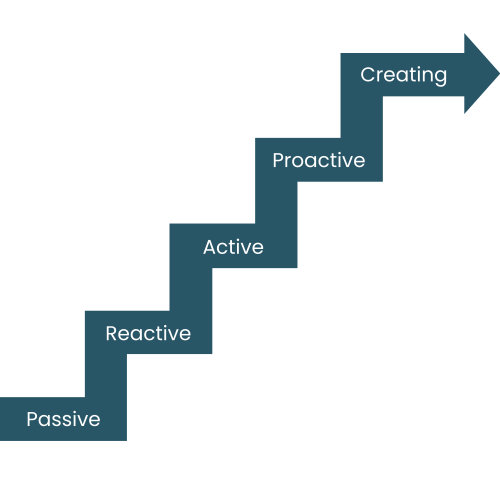
Based on the Vision Zero Maturity Scale Model, you can determine the current level of prevention within the psychosocial working environment in your organisation:
- The creative level: The psychosocial working environment is fully integrated into management practices with an ongoing, daily focus. The organisation seeks to be the best workplace to attract and retain both leaders and employees.
- The proactive level: The organisation prioritises psychosocial wellbeing, seeking to prevent psychosocial challenges before they occur.
- The active level: Psychosocial wellbeing is stated as a priority, but there is not always clear alignment between words and actions.
- The reactive level: The organisation addresses psychosocial wellbeing only as a response to, for example, multiple stress occurrences or conflicts.
- The passive level: Psychosocial wellbeing is not a priority within the organisation.
Create balance at work
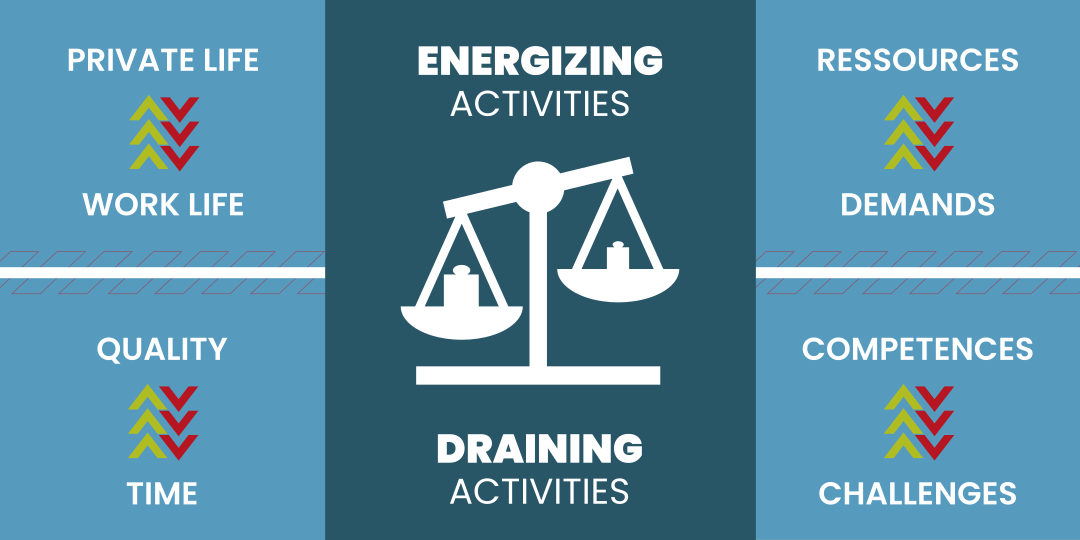
Psychosocial wellbeing means establishing a balance between energising and draining activities. There are many risk factors affecting the psychosocial working environment, making it important to focus on mental balance and implement systems that support each employee in maintaining that balance.
Typical risk factors:
- Work tasks
- Heavy workload and high pace
- Overtime
- Lack of control
- Role ambiguity
- Unclear demands
- Role conflicts
- Inflexible working hours
- Conflicts
- Bullying and harassment
Get help building system and achieving better wellbeing
We have extensive experience advising organisations on Vision Zero and psychosocial wellbeing. Regardless of your current prevention level, we can help you move forward. Learn more about our services for proactive goals and implementing Vision Zero's 7 Golden Rules.
Proactive goals within psychosocial wellbeing
Vision Zero is about the journey towards a higher level of prevention. This applies equally to the psychosocial working environment. We can help you define your organisation’s current level and guide you to the next step.

- Employee evaluations of leaders as role models (questionnaire).
- Frequency of psychosocial wellbeing being included on the agenda at meetings or in 1:1 dialogues.

- Number of risk assessments in relation to organisational changes.
- Frequency of management follow-up on reported wellbeing incidents (analysis, improvements, and feedback to those involved) – for example, in teams with many conflicts or persistently heavy workloads.

- Evaluation of targets set based on selected workplace assessment results (questionnaire).
- Frequency of onboarding instructions relating to the psychosocial working environment (e.g., principles for task prioritisation or company code of conduct).

- Frequency of start-up meetings with psychosocial working environment on the agenda (for example, workload and collaboration within the group).

- Frequency of wellbeing considerations when investing in new IT solutions (e.g., requirements for complexity and learning of new processes).

- Number of training programmes regarding the psychosocial working environment (such as stress prevention, guidelines for good behaviour, or policies on inappropriate conduct).

- Extent of knowledge sharing regarding successful wellbeing initiatives and practices.
The 7 Golden Rules in psychosocial wellbeing
Get help implementing Vision Zero's 7 Golden Rules in your organisation’s psychosocial working environment.

Expert consultancy in psychosocial wellbeing
As an authorised working environment consultant, we offer a wide range of services related to psychosocial wellbeing – including advice on issues ranging from bullying and harassment to stress, violence, and threats in the workplace. We also offer both indivial therapy sessions and crisis support.
Any questions?