

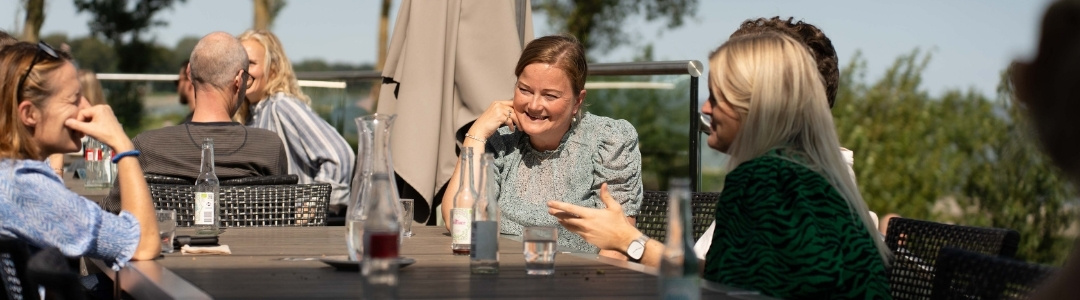
Can I join too?
Imagine walking into the canteen. All around, your colleagues are sitting in small groups, laughing and deeply engaged in conversation. You look around for a place to sit, but no one invites you to join them. You feel a knot in your stomach – a sense of being left out of the community. You feel excluded.
Exclusion is not limited to the school playground; unfortunately, even as adults, exclusion finds its way into workplaces. It is rarely overt, and it is rarely either malicious or intentional.
Exclusion often manifests itself through small actions. A colleague who is never invited for after-work drinks at the pub, an employee who is consistently overlooked during meetings, or a newly hired staff member who never truly becomes part of the group. Even though it is rarely ill-intentioned, exclusion can have a significant impact on both wellbeing and productivity.
Being excluded from the group has consequences, including:
1. Reduced wellbeing and motivation
Research show that social exclusion activates the same areas in the brain as physical pain. When we feel excluded, it affects our self-esteem, triggers stress, and can ultimately lead to lower engagement and motivation.
2. Less effective collaboration and innovation
A strong workplace community is essential for knowledge sharing and innovation. When employees feel excluded, they are less likely to share ideas, take initiative, and contribute actively to the team. Psychological safety is a prerequisite for learning and development – and exclusion undermines this safety.
3. Increased employee turnover
If an employee does not feel part of the group, the likelihood that they will look elsewhere for employment is significantly higher. Replacing an employee comes at a cost in both time and money, and it can also disrupt team dynamics.
Should everyone always be included?
But does this mean we must always include everyone in absolutely everything? Are we never allowed to form our own small groups at work?
Of course, we are allowed to have our cycling club, knitting club or group who enjoy a Friday beer every now and then. The problem arises when exclusion becomes a systematic part of the culture, and when some individuals are consistently left out.
It is not about everyone being best friends; rather, it is about ensuring that everyone feels like part of the workplace community.
Who is responsible for a non-exclusive workplace?
Management and the safety and health organisation play an important role in creating an inclusive culture, and the first step is putting exclusion on the agenda.
Once the conversation has started, managers have a significant responsibility to ensure that all employees feel included. Concretely, this can be done by:
- Ensuring that all employees are heard and involved in decision-making processes.
- Being attentive to employees who are frequently overlooked in both social and professional contexts.
- Creating a culture where it is natural to discuss wellbeing and inclusion.
However, inclusion is not solely a management responsibility. It is a collective responsibility, and even the smallest collegial actions can make a big difference. As a colleague, you might, for instance:
- Invite a colleague to join you for lunch or a coffee break.
- Ensure everyone has the opportunity to contribute during meetings.
- Be aware if anyone is frequently left standing alone at social events.
As a colleague, you can follow a simple rule to help ensure no one in the workplace feels excluded. This is called the three-metre rule, commonly used in amusement parks to ensure good customer experiences: Consider how you can be a good colleague to those within a three-metre radius of you, and make sure they feel included. This might be a smile, an invitation, or simply acknowledging their presence.
How do we create an inclusive working environment?
An inclusive working environment and community starts with awareness. Many forms of exclusion happen unconsciously, as we naturally seek out those who are similar to ourselves. By recognising our own habits and patterns, we can actively work to create a stronger sense of belonging at work.
Inclusion is, therefore, a shared responsibility. We are no longer children in the playground, and while we cannot – and should not – be friends with everyone, we must ensure we have a workplace where everyone dares to ask, “Can I join?” – and where the answer is always a warm and inclusive “Yes!”
Any questions?