
ISFP
Versatile supporter
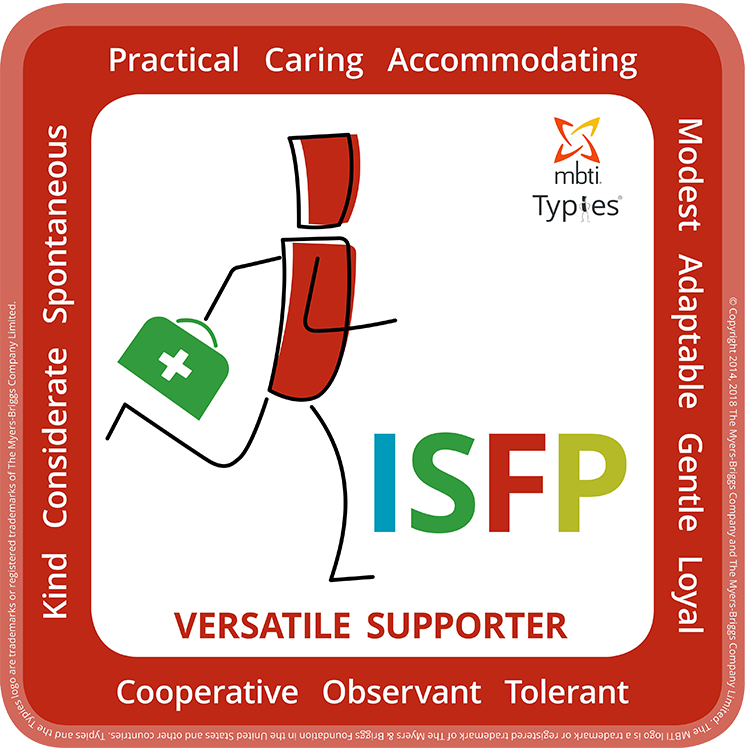
The ISFP personality type is sensitive, gentle and attentive to the needs of others. ISFPs thrive when providing practical help to those around them and are skilled at creating a sense of belonging and fostering collaboration among colleagues.
Individuals with the ISFP type code often come across as less assertive than other types, which means they may have less natural influence in the workplace. Their strong focus on the well-being of others can make it challenging for them to make tough decisions, and they may sometimes postpone decisions in the hope that a better opportunity will arise.
ISFPs greatly value the freedom to follow their own path and appreciate having the space to organise their day independently. They also offer the same freedom to those closest to them. It can take some time to get to know an ISFP well, but they are highly aware of those around them, demonstrating their care through actions rather than words.
Typical ISFP characteristics
- Cooperative
- Modest
- Adaptable
- Gentle
- Loyal
ISFP career paths
ISFPs often prefer to work independently and are most comfortable with practical or analytical tasks. Typical career paths that attract ISFPs include engineering, surgery and agriculture.
ISFPs under stress
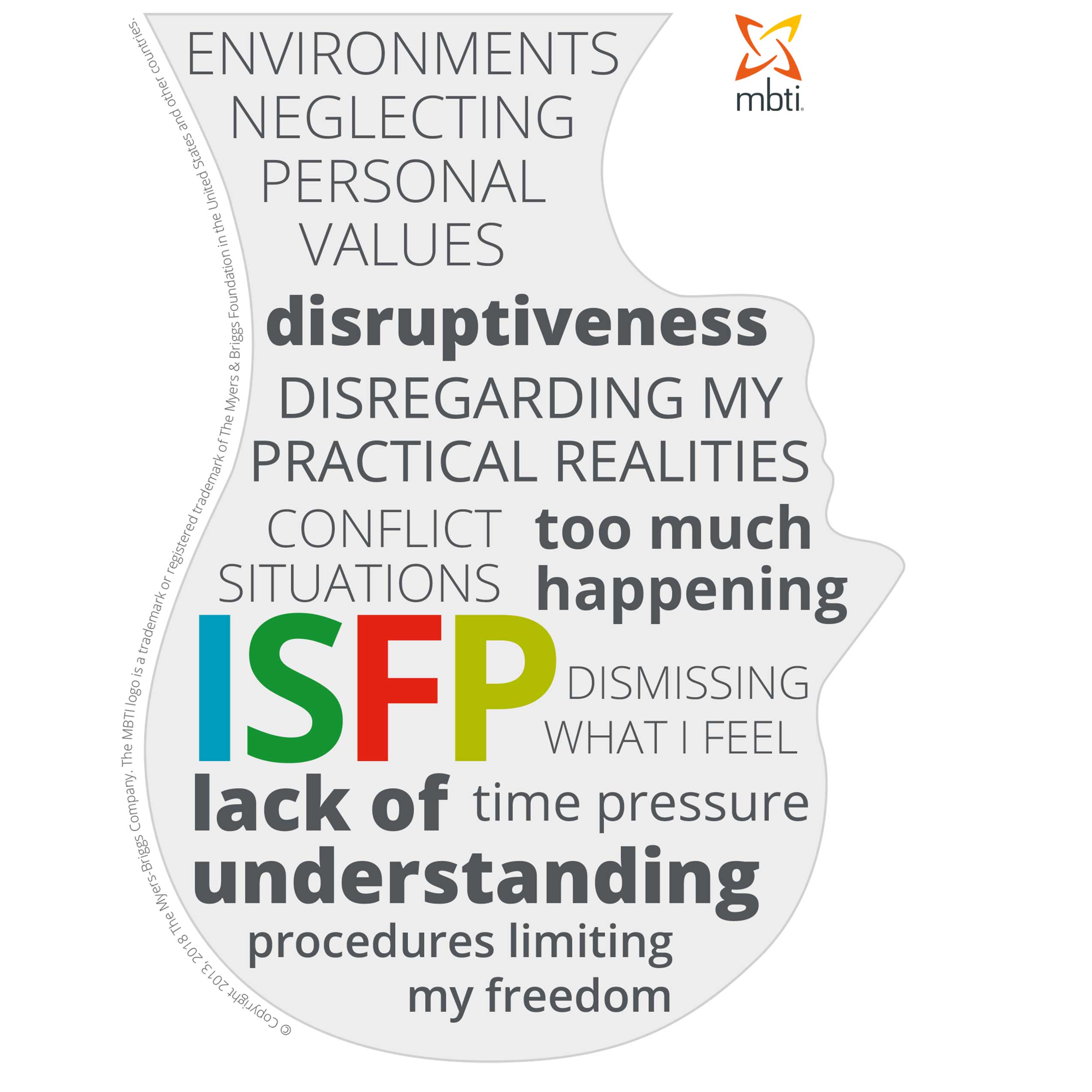
ISFPs can feel particularly pressured when they are required to juggle many tasks and roles at the same time, or when their work involves a rigid structure and tight deadlines. Conflictual or hostile environments can be especially challenging, as can situations where there is not enough time to work alone. Dealing with controlling, demanding or confrontational individuals can also prove difficult.
When under significant stress, ISFPs tend to become self-critical and may find themselves being judgemental towards others or expressing themselves in a negative manner.
Use the MBTI® Stress Head as a reminder of what commonly stresses ISFPs.